"Oxygen Deficit has high prognostic value with a fidelity that exceeds or matches the accuracy of the best predictive tools for respiratory failure in the published literature." NIH funded study, J. Clin. Med. 2025, 14, 5880
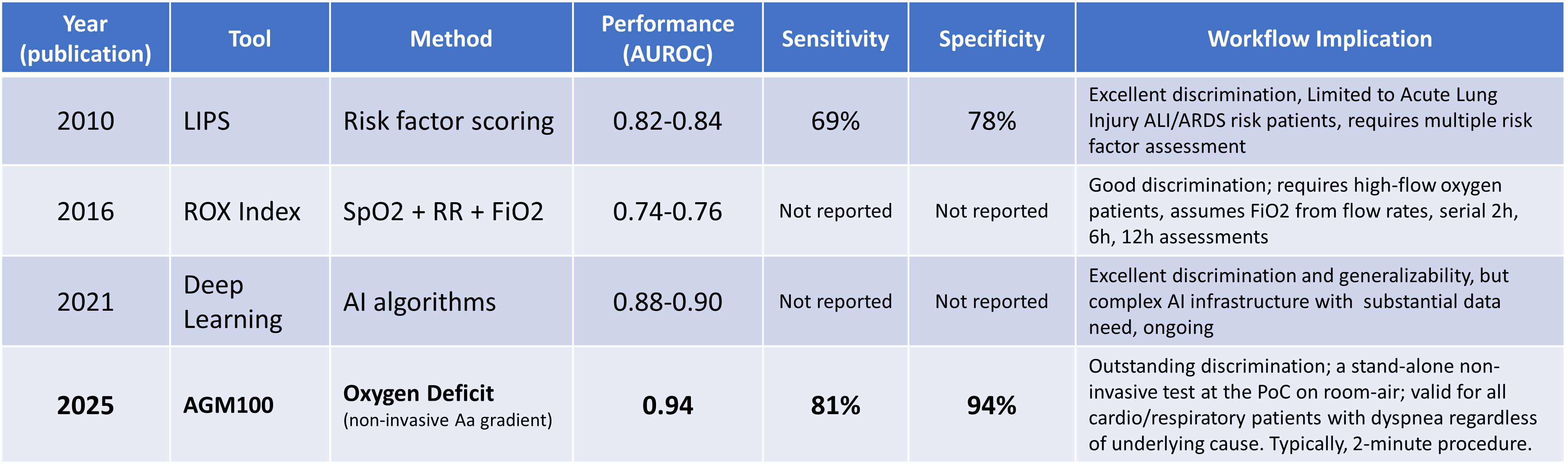
Source: NIH funded study, (J. Clin. Med. 2025, 14, 5880); discussion with comparative analysis
Physician-scientists evaluated how well the AGM100 could predict imminent respiratory failure in the Emergency Department, using the need for oxygen therapy within 24 hours as a real-world proxy for patient decline. The study found that across a broad range of underlying conditions, including COPD, asthma, heart failure, and pulmonary embolism, the Oxygen Deficit predicted this outcome with outstanding discrimination (AUROC 0.94, p < 0.001).
What this means in workflow: at a cutoff of 37 mmHg, Oxygen Deficit had a sensitivity of 81% and a specificity of 94%. In the study, about 15 of every 16 patients it flagged went on to need supplemental oxygen, giving clinicians an early, clear signal at the bedside.
Beyond flagging risk, the same session adds physiological context. Oxygen Deficit quantifies gas exchange impairment, while end tidal CO₂ provides information about ventilation. Because the test is brief and noninvasive, it can be repeated to follow the patient over time.
The MediPines AGM100 provides a noninvasive assessment of oxygenation, ventilation, and gas exchange efficiency. The studies below focus on estimated arterial oxygenation and Oxygen Deficit, how these measures compare with arterial blood gas measurements, and how they may inform clinical assessment in acute and chronic disease.
What Oxygen Deficit Measures
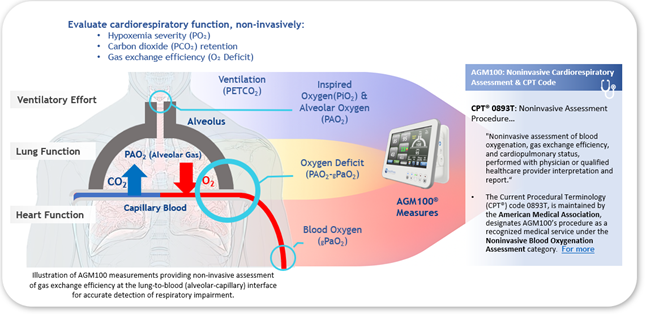
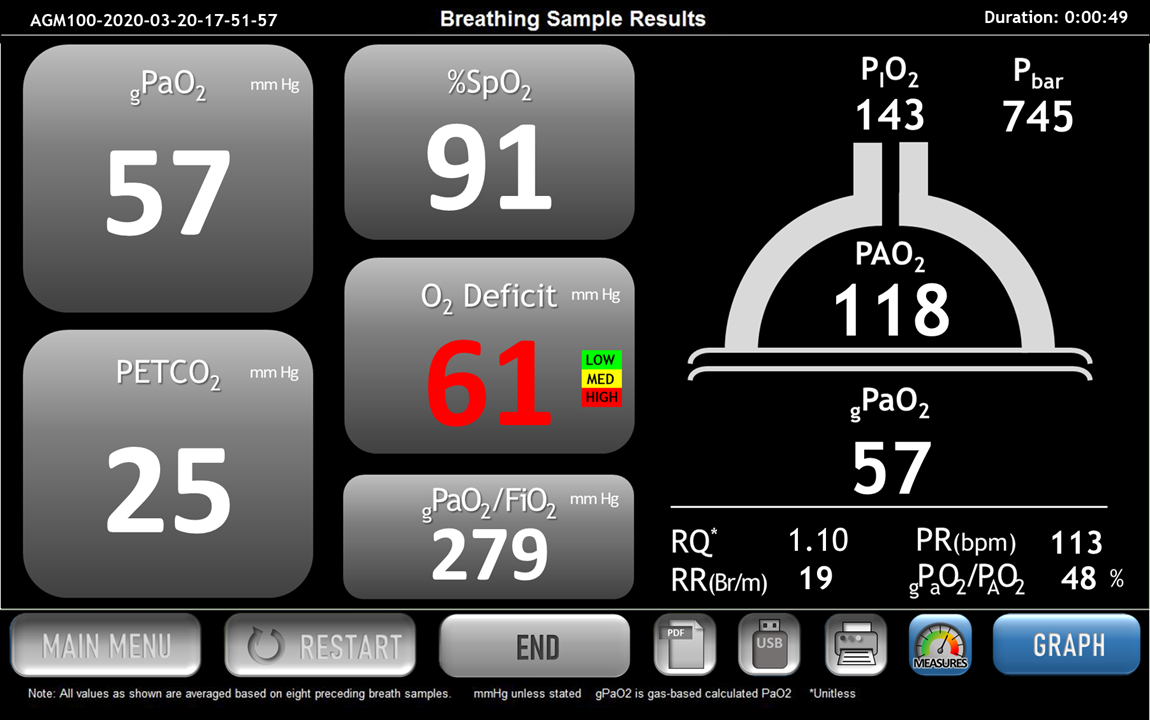
Oxygen Deficit is the difference between alveolar oxygen pressure (PAO₂) and noninvasively estimated arterial oxygen pressure (gPaO₂). It is a measure of pulmonary gas exchange efficiency and a noninvasive surrogate for the alveolar–arterial (A–a) oxygen difference. The AGM100 calculates Oxygen Deficit from measurements collected during about one minute of quiet breathing on room air.
Respiratory Failure Prediction
McGuire et al. · Journal of Clinical Medicine, 2025
In a prospective, NIH-funded study at two academic emergency departments, Oxygen Deficit measured during the initial assessment had an AUROC of 0.937 for predicting supplemental oxygen use within 24 hours, compared with 0.888 for SpO₂. In a multivariable model that included both measures, Oxygen Deficit remained a statistically significant predictor (p < 0.001), while SpO₂ fell short of the 0.05 threshold (p = 0.054).
COPD, Other Lung Diseases and Healthy Reference Values.
West et al. · CHEST, 2018
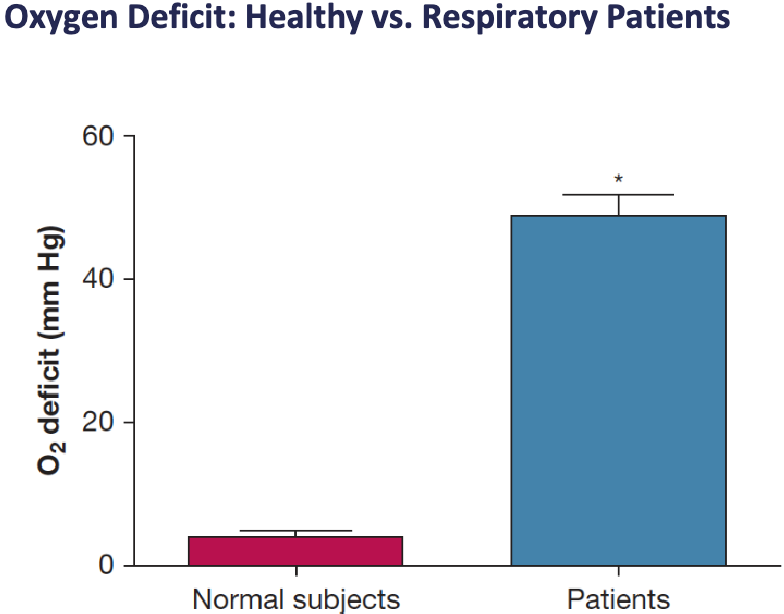
In 17 outpatients with a range of lung diseases, mean Oxygen Deficit was approximately 49 mmHg, compared with 4 mmHg in healthy subjects. Patients with similar SpO₂ readings could have substantially different Oxygen Deficit values.
Champigneulle et al. · Journal of Clinical Medicine, 2023
In patients with moderate-to-severe COPD studied at 3,100 meters, estimated and measured arterial oxygen pressures differed by 2.0 mmHg on average.
West et al. · American Journal of Physiology–Lung Cellular and Molecular Physiology, 2018
The study characterized reference values for Oxygen Deficit in healthy subjects.
Liu et al. · American Journal of Physiology–Lung Cellular and Molecular Physiology, 2020
In healthy adults, Oxygen Deficit increased with age, including during room-air breathing.
Pulmonary Vascular Disease
Patel, Kermanian, and Matusov · ATS conference abstract, 2023
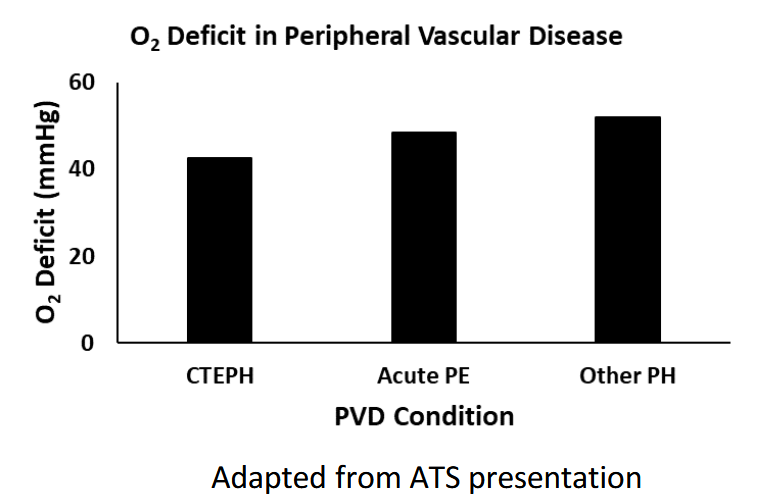
Cedars-Sinai investigators reported elevated Oxygen Deficit in a 17-patient pilot study of pulmonary vascular disease. The study demonstrated that AGM100 testing was feasible in both clinic and acute hospital settings.
Sieck and Ozon · ATS case report poster, 2021
In an emergency department patient classified as low risk for pulmonary embolism, the AGM100 recorded an Oxygen Deficit of 65 mmHg, an SpO₂ of 94%, and a PetCO₂ of 19 mmHg. The elevated Oxygen Deficit prompted further evaluation despite an initial presentation suggestive of cardiac ischemia, and CT confirmed pulmonary embolism.
Acute Care and pulmonary edema
McGuire et al. · Journal of Clinical Medicine, 2023
In a 30-patient study of COVID-19, Oxygen Deficit was higher among patients who were admitted or subsequently required supplemental oxygen.
Ahmed et al. · Undersea and Hyperbaric Medicine, 2026
In a study of U.S. Naval Special Warfare candidates, Oxygen Deficit was higher in confirmed cases of swimming-induced pulmonary edema (SIPE) and was associated with chest radiograph severity graded for interstitial and airspace edema.
Measurement and Validation
Howe et al. · CHEST, 2020
The study compared noninvasively estimated arterial oxygen pressure (gPaO₂) with PaO₂ measured by ABG at rest and during exercise under normoxic and hypoxic conditions. Across 224 paired measurements, the comparison showed an R² of 0.97 and a mean bias of 1.7 mmHg.
West et al. · American Journal of Physiology–Lung Cellular and Molecular Physiology, 2019
In 34 patients with lung disease, Oxygen Deficit correlated with the A–a oxygen difference calculated from arterial blood gas measurements (r = 0.72).
Prisk and West · Journal of Applied Physiology, 2019
The authors describe how expired gas measurements and pulse oximetry are used to estimate arterial oxygen pressure and calculate Oxygen Deficit.
Aa Oxygen Difference (AaDO₂), Hypoxemia and Chronic Respiratory Failure Risk in COPD
Nagata et al. · PLOS ONE, 2025
In a longitudinal study of 170 COPD outpatients assessed at baseline, 21 of the 157 who completed follow-up developed chronic respiratory failure. A higher baseline Aa oxygen difference and a greater increase over the first year were each associated with later development of chronic respiratory failure in multivariable analysis.
Uemasu et al. · Respirology, 2019
In a six year observational study, 164 of 172 COPD outpatients completed follow-up. Patients with mild hypoxemia at baseline (PaO₂ < 80 mmHg), particularly those whose PaO₂ declined during the first year, were at increased risk of chronic respiratory failure.
Occult Hypoxemia and Pulse oximetry
Independent research provides context for interpreting pulse oximetry alongside other measures of oxygenation and gas exchange.
Sjoding et al. · New England Journal of Medicine, 2020
In hospitalized patients, paired measurements showed that SpO₂ could appear reassuring despite low arterial oxygen saturation.
Matos et al. · Scientific Data, 2024
The multicenter BOLD dataset links pulse oximetry with arterial blood gas measurements in critically ill patients to support research on discrepancies in oxygen saturation.
Treatment Response Assessment
Pyarali and Cohen · Journal of Pulmonary Diseases and Respiratory Medicine, 2023
In a pilot study of 19 patients undergoing outpatient thoracentesis, Oxygen Deficit improved in some patients and worsened in others. Median Oxygen Deficit was 10.5 mmHg before the procedure and 8.0 mmHg afterward, with no statistically significant change across the group (p = 0.58).
Blanco et al. · American Journal of Respiratory and Critical Care Medicine, 2010
In patients with COPD and pulmonary hypertension, sildenafil lowered pulmonary arterial pressure at rest while arterial oxygenation worsened.
Lederer et al. · COPD, 2012
In a small placebo controlled crossover trial in patients with COPD and emphysema, sildenafil increased AaDO₂ and worsened symptoms and quality of life, with no improvement in exercise capacity.
Ventilation and Perfusion (V/Q) Mismatch in COPD
Wagner et al. · Journal of Clinical Investigation, 1977
Patients with COPD exhibited distinct patterns of ventilation and perfusion inequality. A single oxygenation value can obscure differences in the underlying gas exchange physiology.
Perspectives on Pulmonary Gas Exchange
Pickerodt et al. · American Journal of Physiology-Lung Cellular and Molecular Physiology
Go West: translational physiology for noninvasive measurement of pulmonary gas exchange in patients with hypoxemic lung disease.
West, J.B. · Physiological Reports. 2018
A lifetime of pulmonary gas exchange.
Terminology Note on Oxygen Deficit and AaDO₂
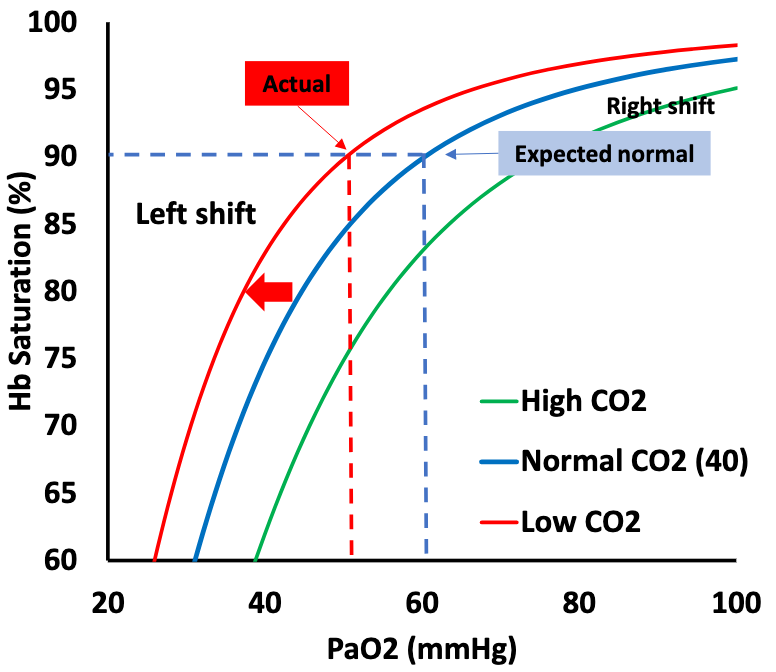
To calculate Oxygen Deficit, the AGM100 measures end tidal oxygen directly in exhaled breath and averages the readings over several breaths to obtain alveolar oxygen pressure (PAO₂). It then subtracts gPaO₂, a noninvasive estimate of arterial oxygen pressure that accounts for the Bohr effect, which is the effect of CO₂ on hemoglobin’s affinity for oxygen.
AaDO₂, also called the Aa gradient or Aa oxygen difference, is calculated by subtracting PaO₂ obtained from invasive ABG from PAO₂ calculated using the alveolar gas equation. The conventional calculation of alveolar oxygen pressure (PAO₂) uses assumed values such as PiO₂ = 150 mmHg for inspired oxygen pressure and RQ = 0.8 for respiratory quotient. The AGM100 determines inspired oxygen pressure (PiO₂) and the respiratory exchange ratio from measured PAO₂ directly from end tidal oxygen sampling from exhaled breath.
Both assess the oxygen difference between the lungs and arterial blood. AaDO₂ uses PaO₂ measured by invasive ABG and PAO₂ calculated using the alveolar gas equation. Oxygen Deficit is its noninvasive surrogate, using PAO₂ obtained from directly measured end tidal O₂ and a calculated estimate of arterial oxygen pressure (gPaO₂).
AGM100 Measurements
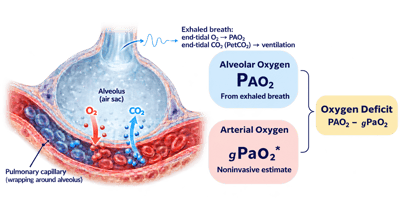
Note: * gPaO₂ is a noninvasive estimate of arterial PO₂, calculated from SpO₂ using the oxygen dissociation curve and corrected for the Bohr effect using real-time exhaled CO₂
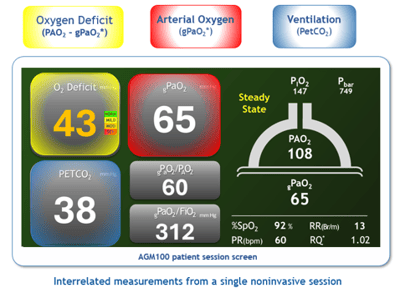
In validation studies, the AGM100’s noninvasive arterial PO₂ showed near one-to-one agreement with arterial blood gas measurements (R² 0.97; mean difference about 2 mmHg), giving clinicians blood-gas-level oxygen information without an arterial puncture (Howe et al., CHEST 2020).

“It is frequently necessary to measure the efficiency of gas exchange in the lung, which is often essential for many patients with pulmonary disease. Oxygen Deficit is the most informative measure of pulmonary gas exchange.”
Dr. John B West

Pulmonary embolism (PE) is a type of venous thromboembolism (VTE) in which a clot or other obstruction breaks off and moves to the pulmonary vasculature and results in reduced pulmonary gas exchange.
There is no question that stand-alone pulse oximetry has become a standard in modern healthcare. It is as ubiquitous as the stethoscope, and as heavily relied upon as the electrocardiogram. That makes it all the more concerning that suddenly, in the midst of the largest respiratory crisis the world has ever faced, healthcare providers are wondering if this long-held lynchpin of healthcare monitoring is leading them astray.
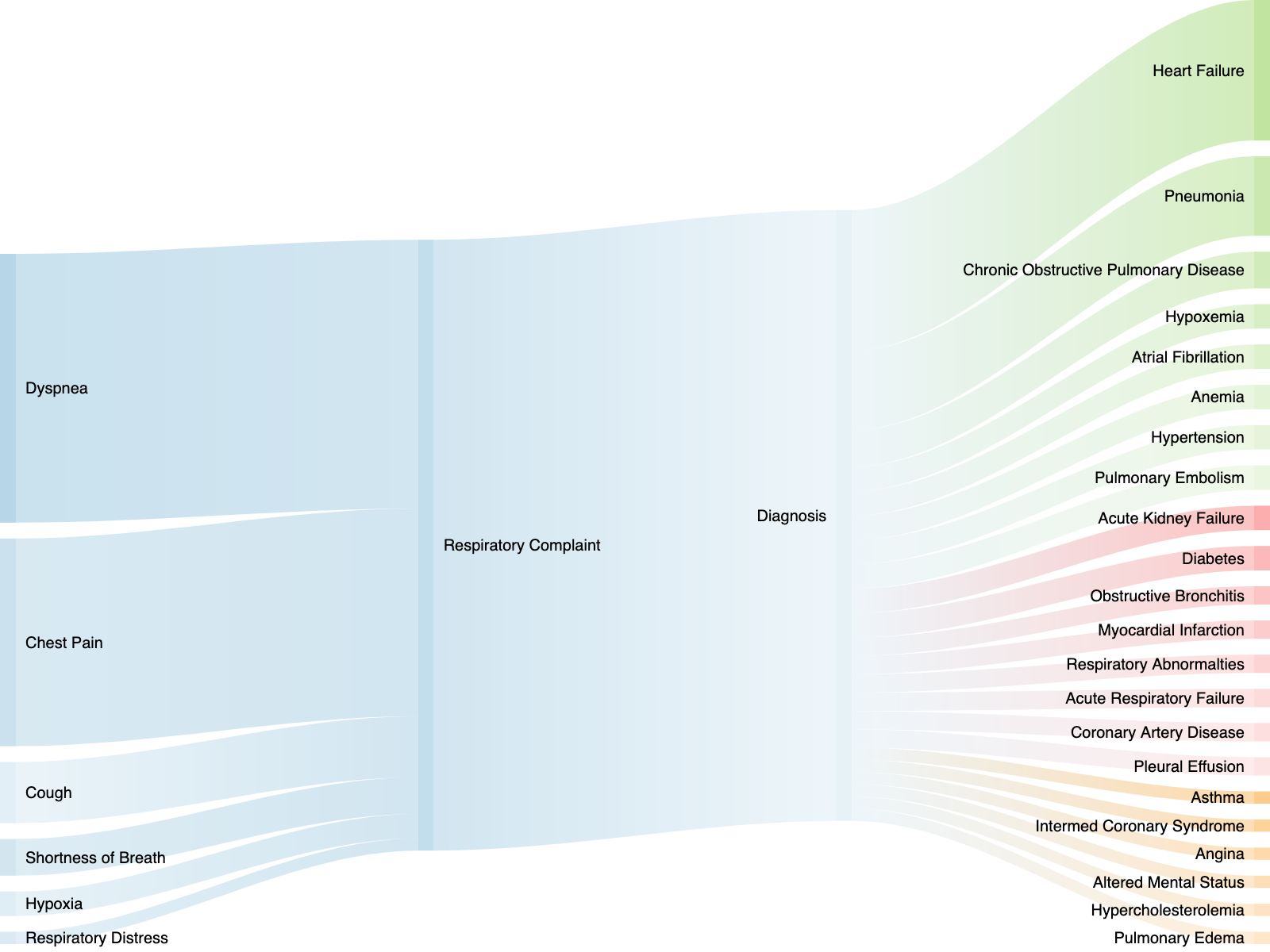
Patients in respiratory distress require immediate medical attention. The ability to quickly identify hypoxemia and its cause is crucial for positive patient outcomes. However, there is a gap in the current cardiorespiratory assessment toolkit that leaves clinicians unable to quickly identify the cause and severity of hypoxemia.
COPD patients in rural America face systemic barriers, limited access to pulmonologists, delayed diagnostics such as PFTs, and late interventions that increase the risk of hospitalization. The MediPines AGM100® bridges this gap with a non-invasive Point-of-Care solution for real-time cardiorespiratory assessment,
This new, noninvasive method of measuring impaired gas exchange in patients with lung disease is very sensitive to the presence of disease and may discard the need for arterial punctures in many instances.
This study demonstrated patients with Pulmonary Vascular Disease demonstrate a significantly elevated Oxygen Deficit and demonstrated the feasibility of testing this device in both a clinic and acute hospital setting. Static oxygen saturation (SpO2) is the most readily available clinical measurement of gas exchange. However, SpO2 leaves out assessment of ventilatory function and subtle changes in arterial partial pressure of oxygen.